An opioid overdose requires immediate medical attention. Call 911 immediately if you or someone you know exhibits any of the symptoms.
×

- Substances
- Dangers
- Naloxone
- Community Care
- How to Help
- Road to Recovery
- Videos
- About Us
- Resources
An opioid overdose requires immediate medical attention. Call 911 immediately if you or someone you know exhibits any of the symptoms.
Recovery from substance use disorder looks different for everyone. There is no one-size-fits-all solution, and sometimes, it’s not even about abstinence. Understanding recovery as a holistic, individual journey helps reduce stigma and support those on their way to a healthier life.
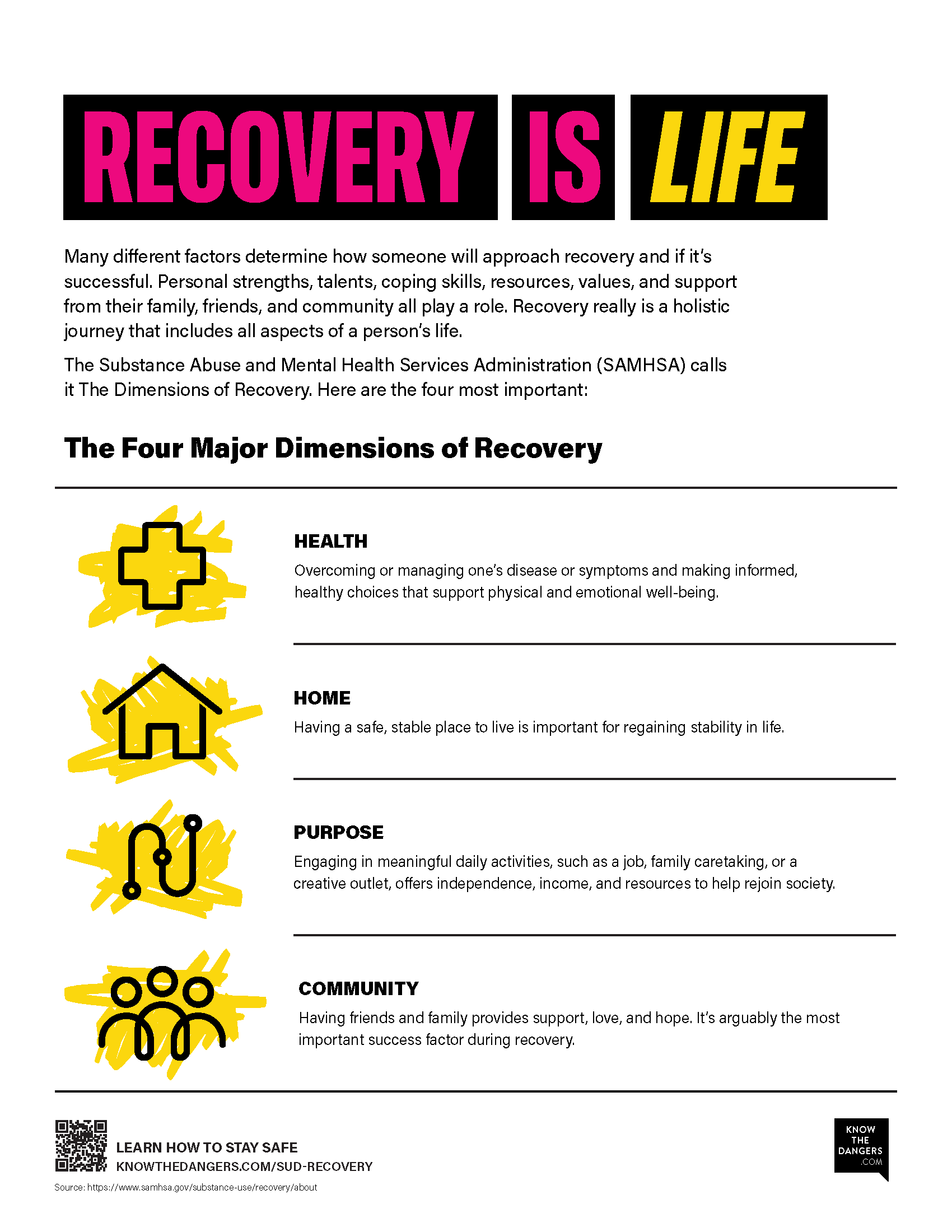
Many different factors determine how someone will approach recovery and if it’s successful. Personal strengths, talents, coping skills, resources, values, and support from their family, friends, and community all play a role. Recovery really is a holistic journey that includes all aspects of a person’s life. The Substance Abuse and Mental Health Services Administration (SAMHSA) calls it The Dimensions of Recovery. Here are the four most important:
Swipe to learn more.
Overcoming or managing one’s disease or symptoms and making informed, healthy choices that support physical and emotional well-being.
Having a safe, stable place to live is important for regaining stability in life.
Engaging in meaningful daily activities, such as a job, family caretaking, or a creative outlet, offers independence, income, and resources to help rejoin society.
Having friends and family provides support, love, and hope. It’s arguably the most important success factor during recovery.

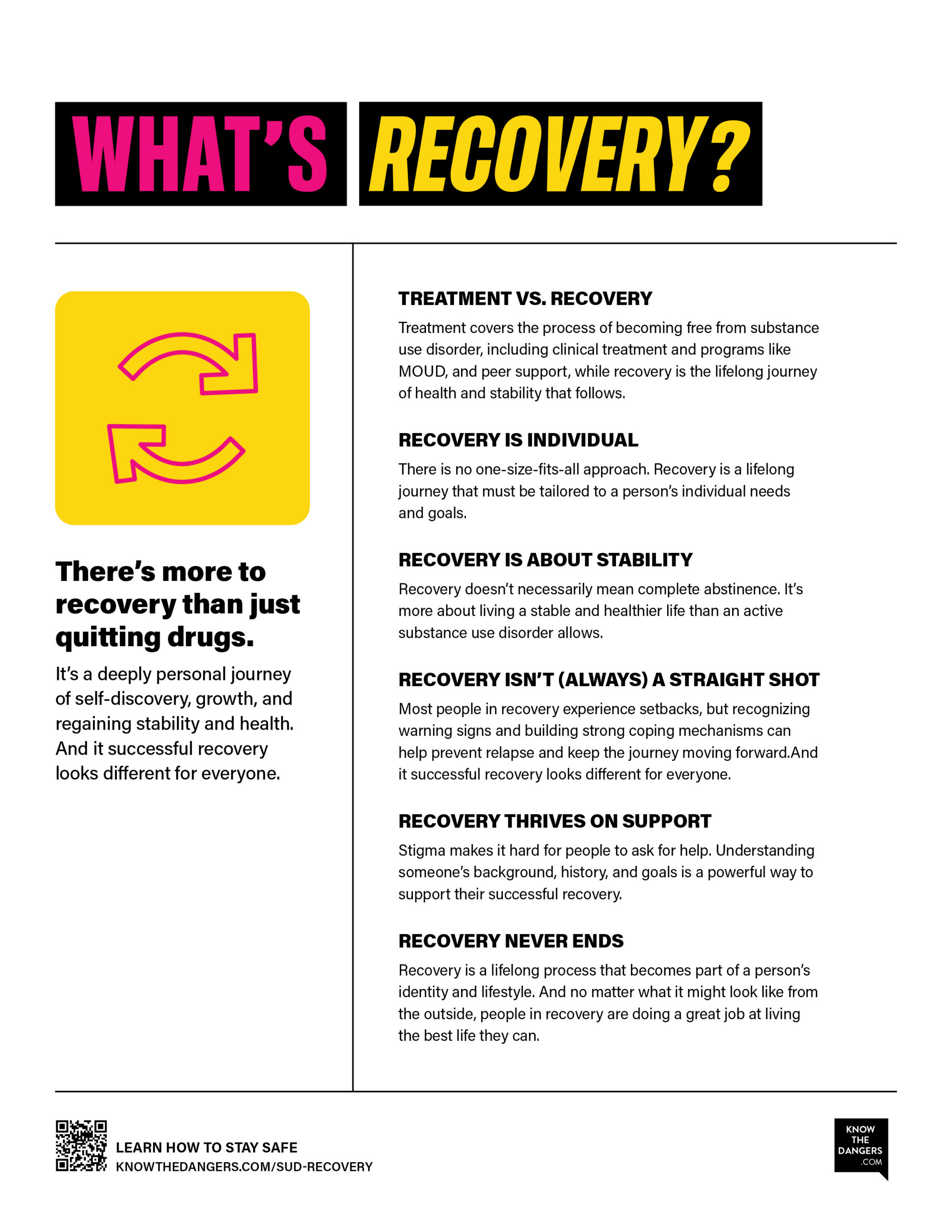
There is more to recovery than just quitting drugs. It’s a highly personal journey of self-discovery, growth, and regaining stability and health. Here are some facts about recovery that can help you better understand and support people going through it.
Treatment describes the overall process of becoming free from substance use disorder. It can include programs like Medication for Opioid Use Disorder (MOUD), therapy, counseling, self-care practices, or peer support.
Recovery is the lifelong journey of regaining stability and health after treatment ends. Simply put, treatment is the starting point; recovery is everything that follows.
There is no one-size-fits-all when it comes to recovery. The process looks different for everyone and needs to be tailored to their individual traits and needs. So, while all recovery has the same goal, the ways to reach it are as multifaceted as the people who walk it.
Recovery doesn’t necessarily mean complete abstinence. It’s more about living a stable and healthier life than an active substance use disorder allows. Everyone has their own recovery goals, milestones, and needs that help them recover. So, while some people might not be “sober” in the traditional sense, they are still in recovery.
Beating substance use disorder can be a daunting task. And for many, the recovery journey is a rocky road. But that shouldn’t keep anyone from trying. Return to use happens to many people in recovery. It’s nothing to be ashamed of and doesn’t mean they’re not making process. Recognizing warning signs and learning coping mechanisms can help prevent it.
There’s a lot of stigma surrounding substance use disorder. That makes it very difficult for people struggling with it to ask for help. Support and motivation from the people around them are key to successful recovery. Understanding someone’s background, history, and goals can help you cheer them on along every step of their sobriety journey.
Recovery is a lifelong process that becomes part of a person’s identity and lifestyle. The important point is that people in recovery are doing a great job at living the best life they can. No matter what it might look like to outsiders.
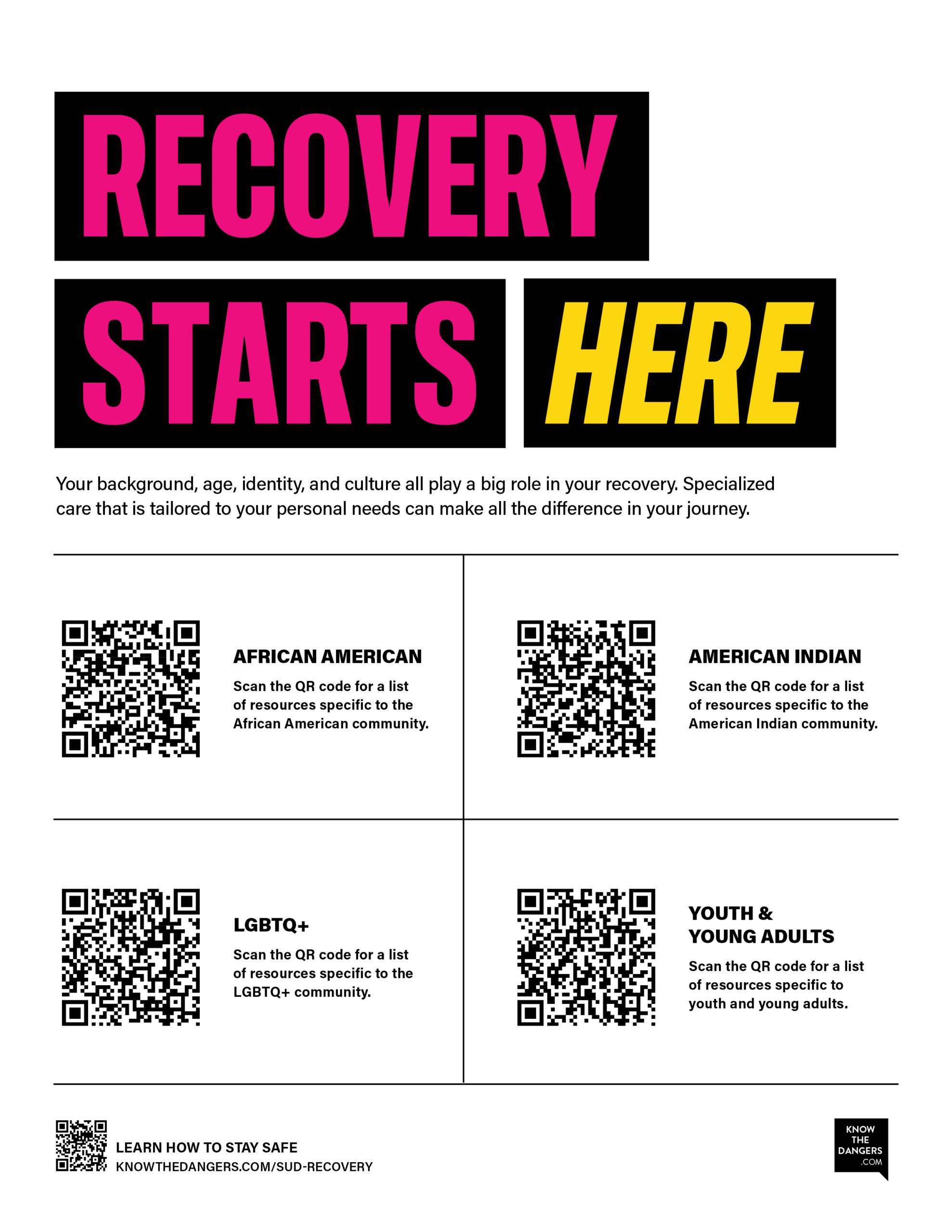
It’s important that recovery programs or support fit a person’s needs, background, and identity to begin a successful journey. Across Minnesota, many organizations offer tailored treatment and recovery services for specific cultural and social groups. Browse our Resources Section to find the best fit for you or a loved one.

Use the free materials below to share life-saving information about substance use, overdose prevention, and recovery with your community, family, and friends.
Resources

Know the Substances
Learn More
Resources
Know the Dangers
Resources
Know the Resources
Learn More
Resources
Know the Facts
Learn More
Resources
Know the Signs
Learn More
Resources
Know the Resources
Learn More
Resources
Know the Stories
Learn More
Resources
About Know the Dangers
Learn More
Resources