An opioid overdose requires immediate medical attention. Call 911 immediately if you or someone you know exhibits any of the symptoms.
×

- Substances
- Dangers
- Naloxone
- Community Care
- How to Help
- Road to Recovery
- Videos
- About Us
- Resources
An opioid overdose requires immediate medical attention. Call 911 immediately if you or someone you know exhibits any of the symptoms.
Prescription opioids are highly addictive drugs. Know the facts to help yourself and the people around you use them safely.
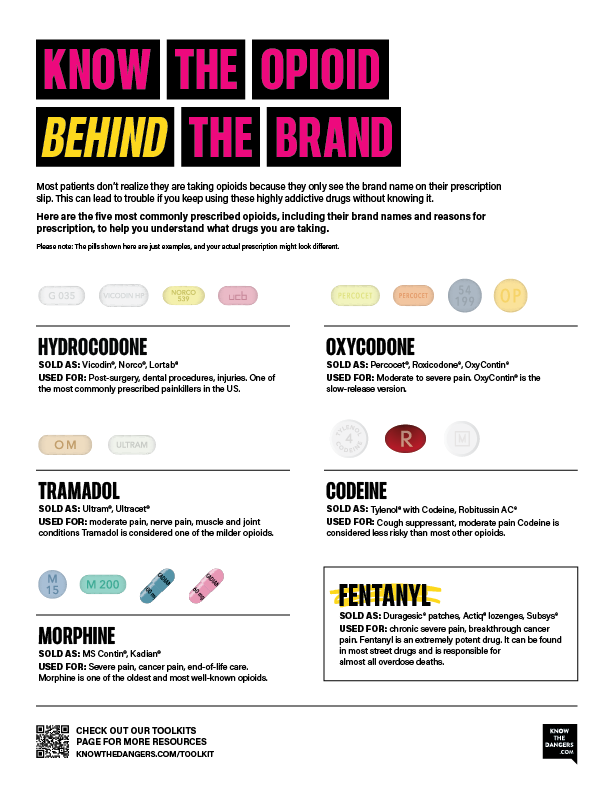
Doctors use opioids to treat mild to severe pain, such as after a surgery or during cancer treatment. But patients often don’t realize they are taking opioids because they only see the brand name on their prescription slip. This can lead to trouble if they keep using these highly addictive drugs without knowing it.
Here are the five most commonly prescribed opioids, plus one that can be found in many street drugs: Fentanyl. Learn what’s behind the brand names and the reasons for prescription to understand what drugs you are taking.
Vicodin®, Norco®, Lortab®
Hydrocodone is one of the most commonly prescribed painkillers in the US. Doctors prescribe it after surgeries, dental procedures, or injuries, and sometimes for ongoing pain when other medications haven’t worked.
Percocet®, Roxicodone®
Oxycodone is used for moderate to severe pain, including after surgery and for cancer patients. A slow-release version called OxyContin(R) is prescribed when someone needs pain relief around the clock.
Ultram®, Ultracet®
Tramadol is considered one of the milder opioids. It’s used for moderate pain, nerve pain, and muscle and joint conditions, and is often prescribed when a doctor wants a less powerful option.
Tylenol with Codeine®, Robitussin AC®
Codeine is a weaker opioid used for mild to moderate pain and to suppress a bad cough. It’s considered less risky than most other opioids on this list.
MS Contin®, Kadian®
Morphine is one of the oldest and most well-known opioids. It’s used for severe pain, cancer pain, and for patients in end-of-life care.
Duragesic® patches, Actiq® lozenges, Subsys®
Fentanyl comes as a skin patch for chronic severe pain, as a lozenge for breakthrough cancer pain, and is also used during surgery.
While it’s safe to use in a clinical setting, fentanyl is the main reason for overdose death because virtually all street drugs are laced with this extremely potent opioid.
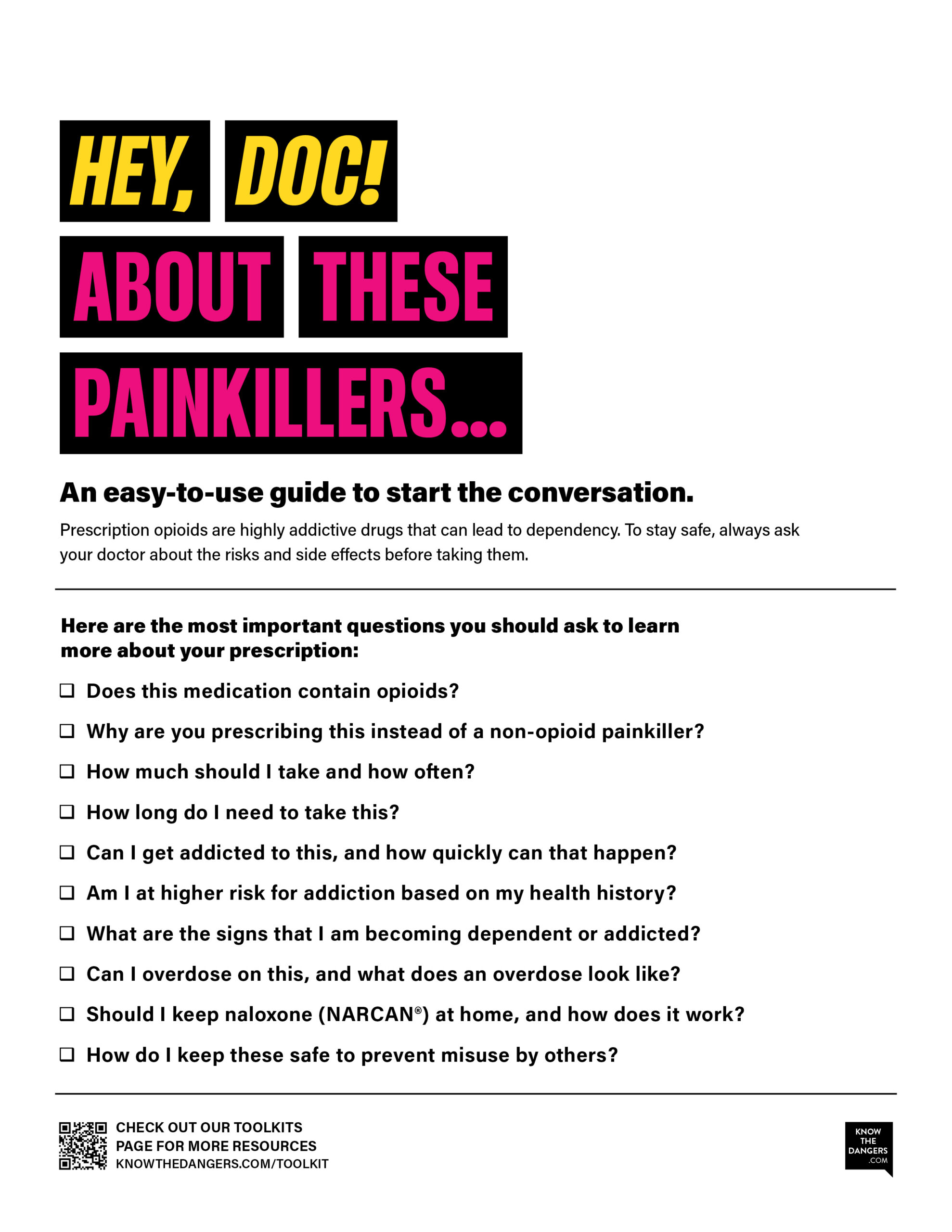
Opioids medications are generally safe when you take them as prescribed. But they are still highly addictive drugs that can lead to dependency. That’s why you should always ask your doctor about the risks and the side effects.
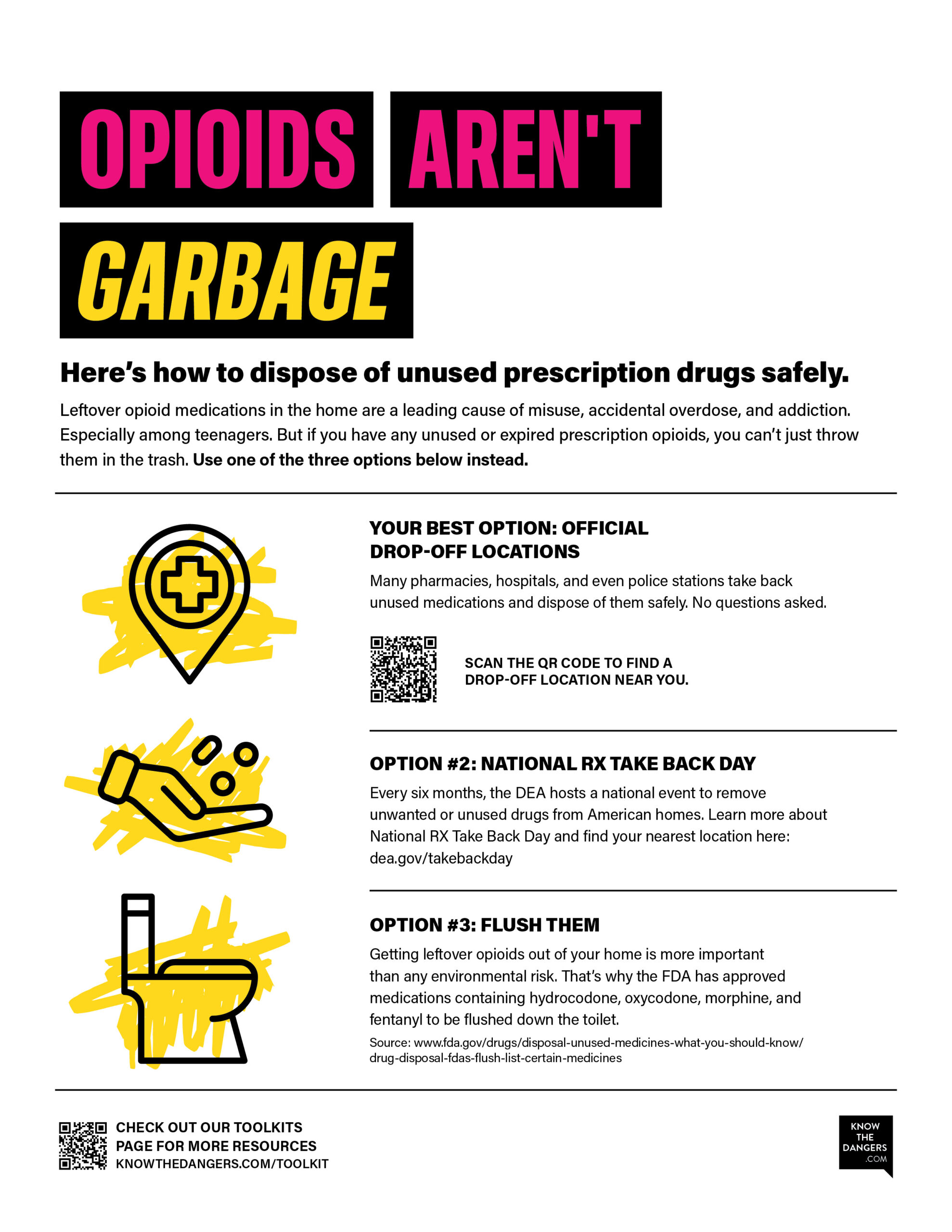
If you have unused or expired opioid prescriptions, you should never throw them in the garbage. Instead, take them to an official drop-off location. Many pharmacies, hospitals, and even police stations take back unused medications to dispose of them safely
Look up your nearest drop-off location.


Leftover pills in the home are a leading source of misuse and accidental overdose, especially among teenagers.
Don’t keep unused opioids “just in case.”
Never share prescription drugs, even if someone has similar pain.
Don’t throw loose pills into the trash where children or pets could find them.
Use the free materials below to share life-saving information about substance use, overdose prevention, and recovery with your community, family, and friends.
Resources

Know the Substances
Learn More
Resources
Know the Dangers
Resources
Know the Resources
Learn More
Resources
Know the Facts
Learn More
Resources
Know the Signs
Learn More
Resources
Know the Resources
Learn More
Resources
Know the Stories
Learn More
Resources
About Know the Dangers
Learn More
Resources