An opioid overdose requires immediate medical attention. Call 911 immediately if you or someone you know exhibits any of the symptoms.
×

- Substances
- Dangers
- Naloxone
- Community Care
- How to Help
- Road to Recovery
- Videos
- About Us
- Resources
An opioid overdose requires immediate medical attention. Call 911 immediately if you or someone you know exhibits any of the symptoms.
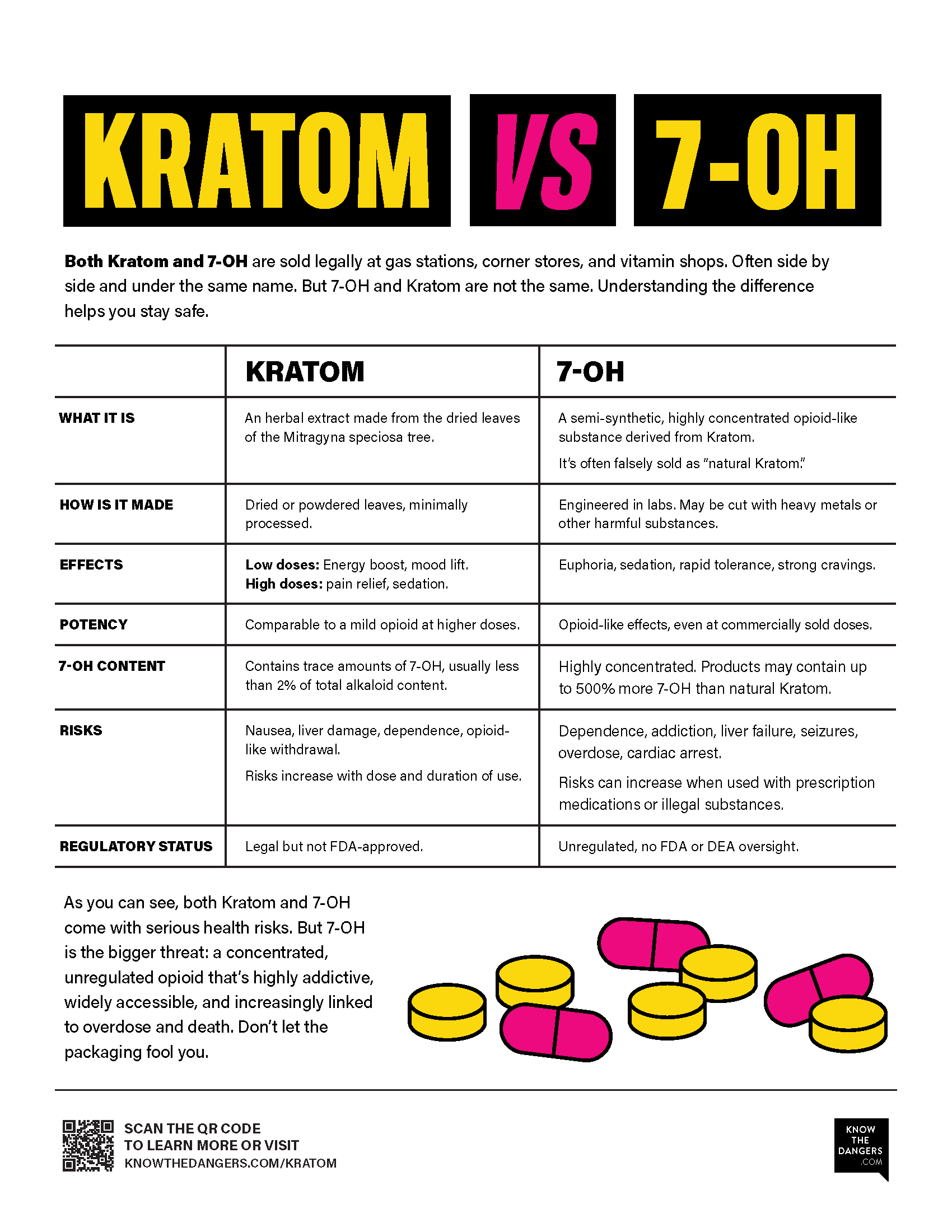
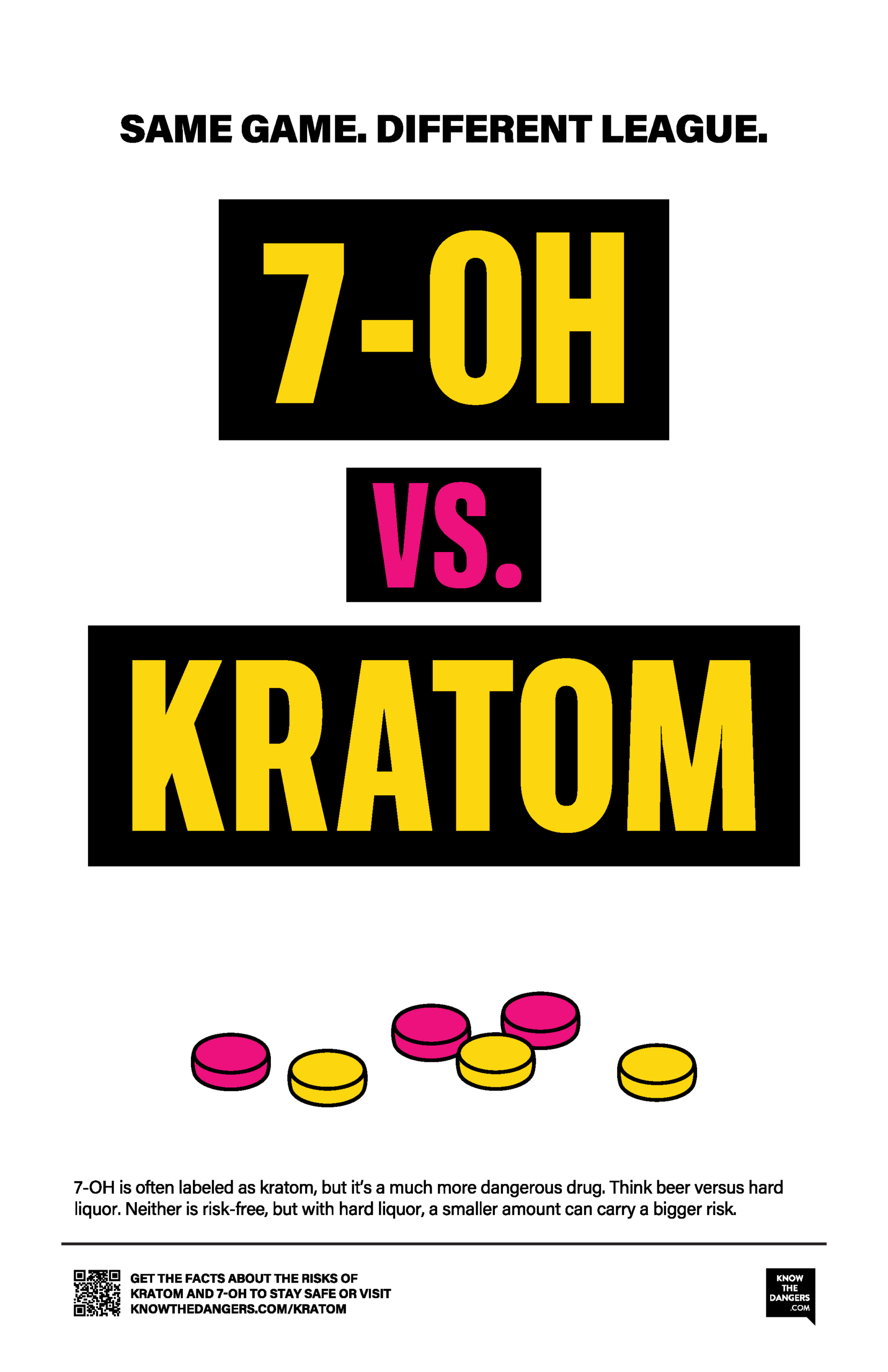
They’re sold at gas stations and corner stores, often under the same name. But Kratom and 7-OH are not the same thing. One is an herbal supplement. The other is an unregulated opioid. Knowing the difference could save your life.
Herbal and legal, that’s how Kratom and 7-OH are marketed. But herbal and legal definitely don’t mean safe.



Kratom is an herbal extract from the Mitragyna speciosa tree. Real plant, minimal processing, trace amounts of the active compound. The risks are real but relatively modest.
7-OH is a semi-synthetic opioid, 13 times stronger than morphine. Lab-engineered, highly processed, extremely powerful, and zero federal regulation. The risks are severe, and 7-OH is fueling a new uptick in the opioid crisis.

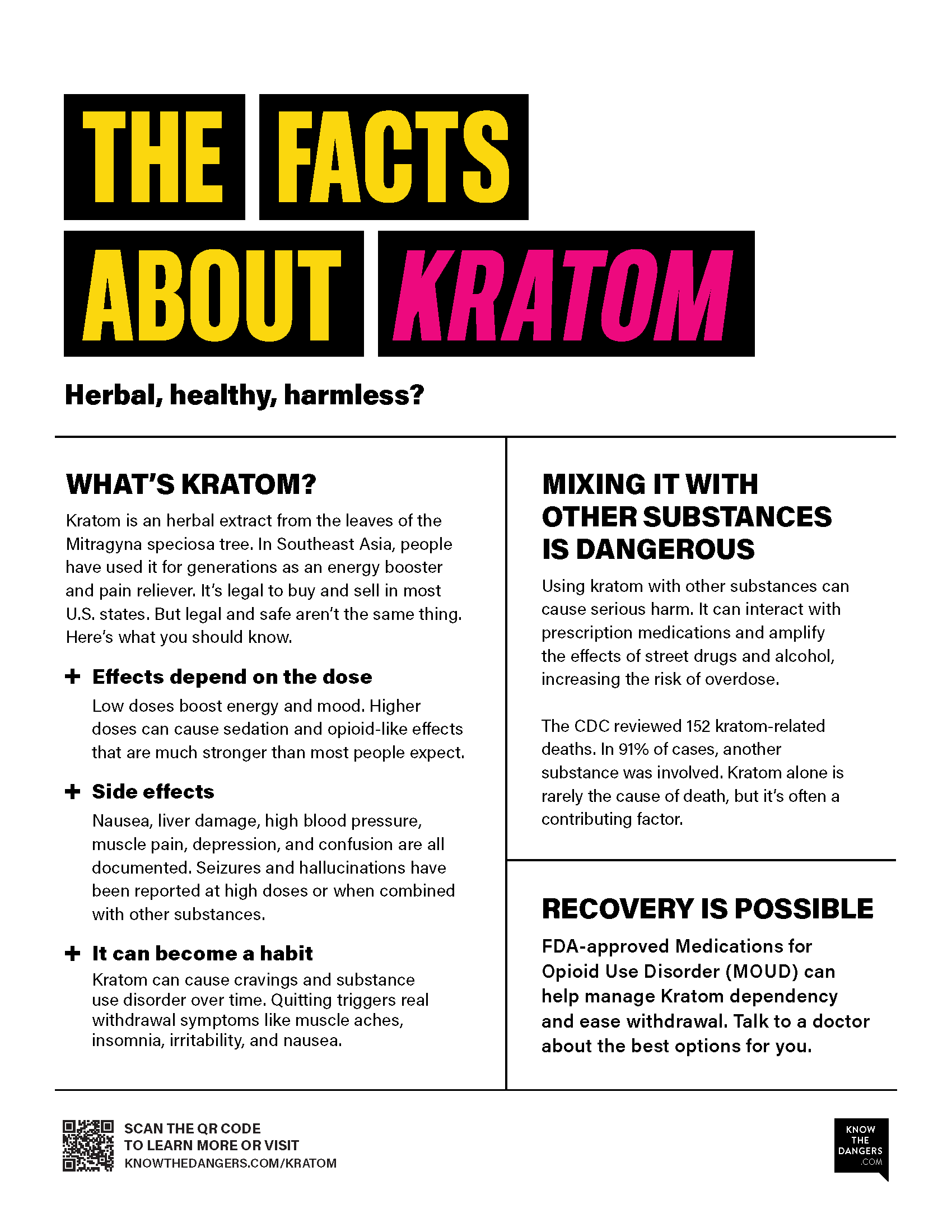
Kratom is an herbal extract from the leaves of the Mitragyna speciosa tree. In Southeast Asia, people have used it for generations as an energy booster and pain reliever. It’s legal to buy and sell in most U.S. states, but legal and safe aren’t the same thing. Here’s what you should know.
The same Kratom product can affect you completely differently, depending on how much you take. At low doses, Kratom acts as a stimulant, boosting energy, mood, and alertness. At higher doses, the effects can shift dramatically to sedation, pain relief, and opioid-like effects that can be stronger than most people expect.
Kratom isn't without consequences. Physical side effects can include:
Mental side effects can include:
Seizures and hallucinations have also been reported, but are more associated with high doses or polysubstance use.
Kratom is often sold as a harmless natural supplement. But research shows it can cause cravings and lead to substance use disorder over time. Quitting can trigger withdrawal symptoms, including muscle aches, insomnia, irritability, and nausea similar to opioid withdrawal symptoms. And while real Kratom isn’t as immediately dangerous as 7-OH, remember: lower risk doesn’t mean no risk.
Using Kratom together with other substances increases the risk of serious harm. The CDC reviewed 152 kratom-related deaths and found that in 91% of cases, another substance, like opioids, prescription drugs, and alcohol, was involved. Kratom alone is rarely the sole cause of death, but it’s often a contributing factor.
If kratom has become a problem, help is available. FDA-approved Medications for Opioid Use Disorder (MOUD) can help manage dependency and ease withdrawal symptoms. If you or someone you know is concerned about their Kratom use, ask your doctor or healthcare provider for recovery options that work for you.
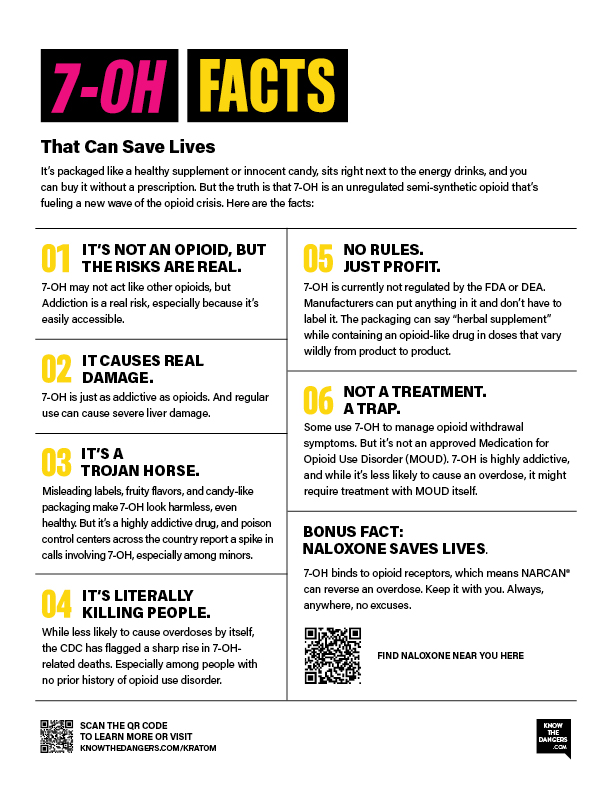
It’s packaged like a healthy supplement or innocent candy , sits right next to the energy drinks, and you can buy it without a prescription. But the truth is that 7-hydroxymitragynine, better known as 7-OH, is an unregulated opioid-like substance that’s fueling a new wave of the opioid crisis.
7-OH may not act like other opioids, but dependence can develop easily, with doses going up fast. Addiction is a real risk, especially because it’s sold right next to the beef jerky and chewing gum.
Not only is 7-OH just as addictive as opioids, but it can also cause severe damage to your liver and other organs. And it has nothing to do with overdosing. It’s a documented side effect of regular use.
Misleading labels like “herbal” and flavors like watermelon make 7-OH look harmless, even healthy. Add eye-catching, candy-like packaging, and people end up buying a highly addictive drug, thinking it’s perfectly fine. But the truth is that poison control centers across the country report a significant increase in calls involving 7-OH, especially among minors.
While 7-OH is less likely to cause opioid overdose by itself, the CDC and state health departments have flagged a sharp rise in kratom- and 7-OH-related death, often in connection with polysubstance use. And many victims didn’t have a history of opioid use disorder.
7-OH is not regulated by the FDA or the DEA. That means anyone can make it and put whatever they want in it with zero legal obligation to tell you. The packaging can say “herbal supplement”, and in doses that vary wildly from product to product.
Some people use 7-OH to manage opioid withdrawal. But it’s not an approved Medication for Opioid Use Disorder (MOUD). In fact, it can make recovery more difficult. 7-OH is highly addictive, and while it’s less likely to cause an overdose, it might require treatment with MOUD itself.
Because 7-OH binds to opioid receptors, naloxone (Narcan®) can reverse an overdose. That’s why you should always have it with you, anytime, anywhere, no excuses.
Find naloxone near you here.
Use the free materials below to share life-saving information about substance use, overdose prevention, and recovery with your community, family, and friends.
Resources

Know the Substances
Learn More
Resources
Know the Dangers
Resources
Know the Resources
Learn More
Resources
Know the Facts
Learn More
Resources
Know the Signs
Learn More
Resources
Know the Resources
Learn More
Resources
Know the Stories
Learn More
Resources
About Know the Dangers
Learn More
Resources